22 Civil Society Organizations & Experts Raise Questions About OpenAI’s Entry into Greek Schools
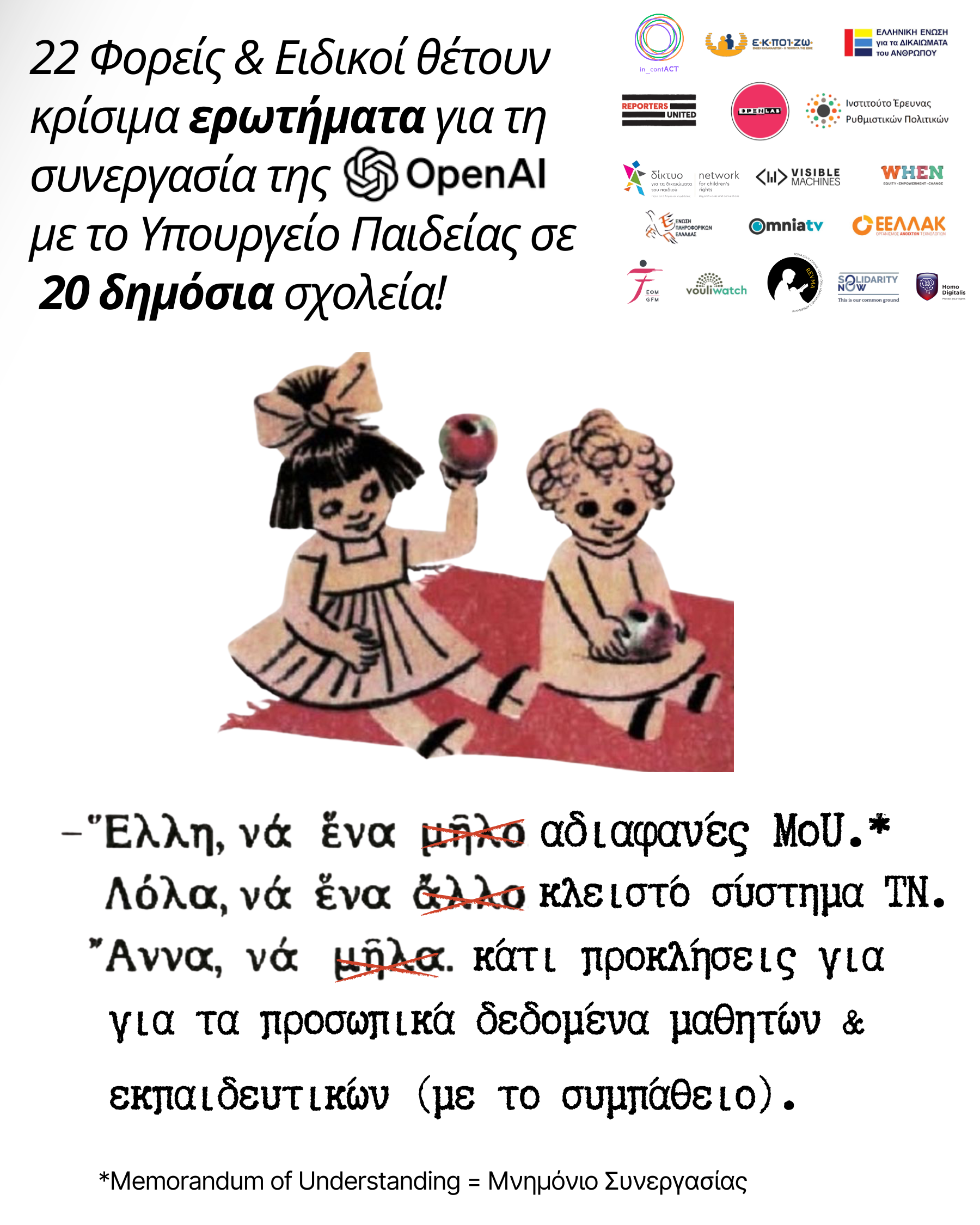
Today, Monday, March 30, through an Open Letter addressed to the Minister of Education, Religious Affairs and Sports, Ms. Sofia Zacharaki, 22 civil society organizations and experts, including Homo Digitalis, requested official information regarding OpenAI’s programs “AI for Greece” and “Education for Countries” in Greece.
As we note, in September 2025 the Ministry announced the signing of a memorandum of cooperation with OpenAI במסגרת the “AI for Greece” program, without any prior open and transparent consultation with educators, students, parents, or relevant civil society organizations.
Moreover, the Ministry silently refused to respond to a formal request for access to relevant documents submitted by Homo Digitalis, despite the fact that it concerned critical issues such as the protection of students’ and teachers’ personal data in the use of ChatGPT Edu in public schools.
According to available information, the program is being piloted in 20 public secondary education schools and is unfolding in three stages. The first stage involves teacher training (October 2025 – November 2025), the second the use of AI tools by teachers themselves (December 2025 – February 2026), and finally the third the introduction of AI tools into the learning process and their use by students (March – June 2026).
In recent weeks, OpenAI has been at the center of international attention due to its cooperation with the U.S. Department of Defense, raising questions about the potential uses of its technologies beyond U.S. borders, particularly given the lack of clear positioning on issues such as the collection of data from citizens of third countries for surveillance purposes.
At the same time, while discussions at the European Union level intensify around digital sovereignty in the era of artificial intelligence—favoring transparent, auditable, and independent solutions—Greece appears to be moving in the opposite direction. The choice of closed, commercial systems by technology companies such as OpenAI in sensitive sectors like education raises further concerns.
In our open letter, we outline a landscape with more questions than answers regarding the introduction of artificial intelligence into Greek schools. We call for clarification on how the two OpenAI programs in Greece are interconnected, which schools are participating and based on what criteria they were selected, and whether this choice promotes equality or risks exacerbating existing inequalities.
At the same time, we highlight the need to clarify what the use of ChatGPT Edu in the classroom means in practice and whether alternative, transparent, and auditable solutions based on the principles of free and open-source software were considered.
Finally, the issue of personal data protection remains central, as we pose critical questions to the Minister regarding what data is being collected, the purposes of its processing, and the private entities managing it.
You can read the full text of the letter here (EL).*
*On 7 April, the number of legal and natural persons who signed the Open Letter increased. Specifically, signatures were added from NGI Zero and Marianthe Stavridou, NGI Zero Representative for Greece and Vice-Chair Internet Society -CH

We enhance accountability at Homo Digitalis
At Homo Digitalis, we are committed to being a trustworthy and transparent organization, maintaining high-quality relationships with our team, donors, partners, suppliers, and all stakeholders.
As part of this commitment, we provide a confidential and independent reporting line available 24/7, allowing anyone to anonymously submit concerns or observations.
We would like to extend a heartfelt thank you to AAB for their collaboration in implementing this initiative, and to European AI & Society Fund for their continuous support and trust in the professionalisation of Homo Digitalis!
Read more and access the form in this link.
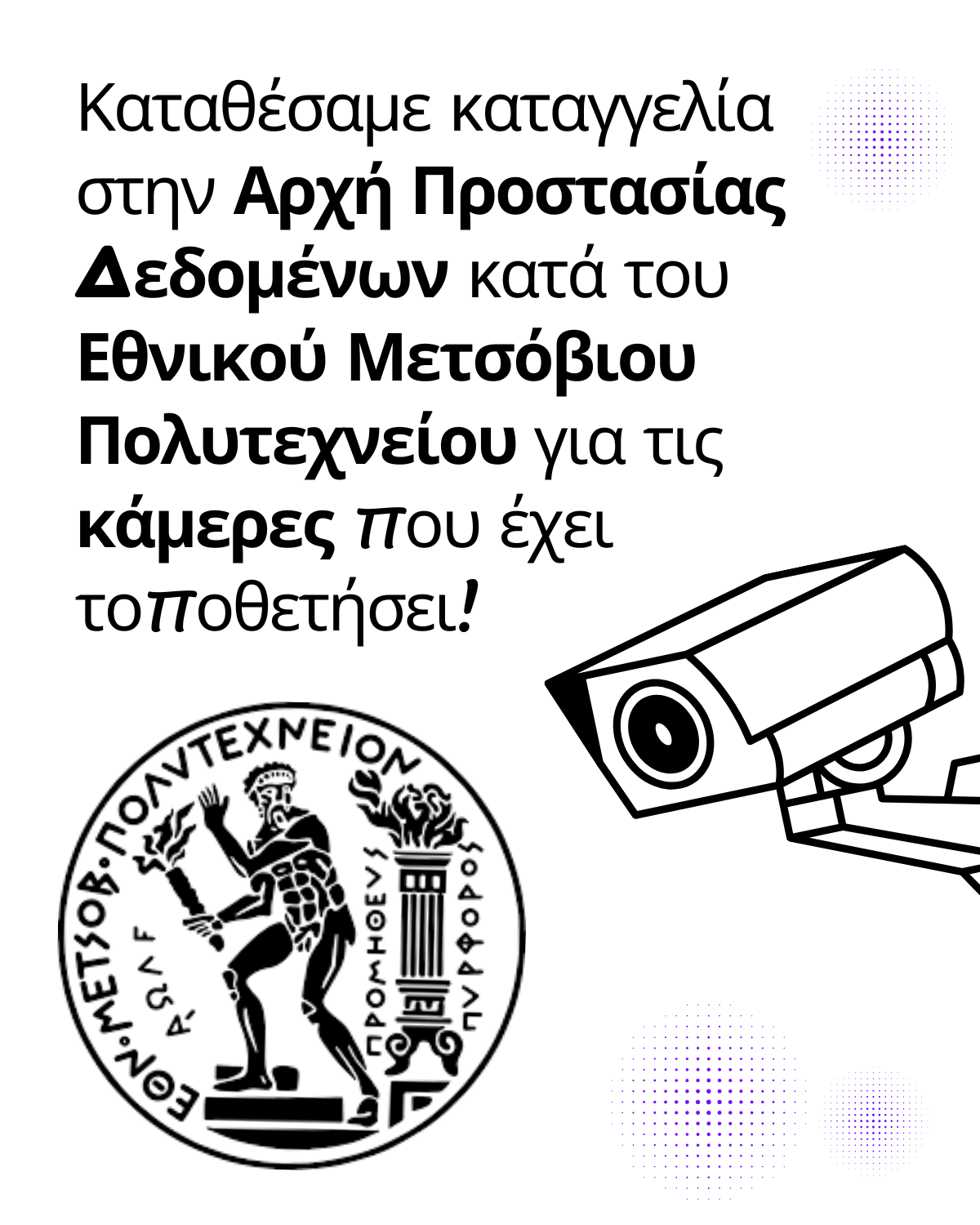
We filed a complaint against the National Technical University of Athens over the use of cameras!
The National Technical University of Athens features the mythical hero Prometheus in its logo, symbolizing forethought and prudence before action. However, in the case of the cameras, it appears that the institution itself did not demonstrate the foresight that Prometheus represents.
Specifically, noting that there does not appear to be a legal basis allowing the university to operate cameras, and given that the institution itself does not clearly specify in its Data Protection Policy which legal basis it relies on, we submitted an access request on January 13 in order to obtain the answers we are entitled to receive.
The deadline to receive a response passed, and despite our polite reminder, no one responded to our request. Therefore, yesterday we proceeded to file a complaint before the Hellenic Data Protection Authority. You can read more in our Press Release here.
The complaint follows joint actions with the organizations Reporters United and Vouliwatch, within the framework of which a joint request had already been submitted, since September 2025, before the HDPA for the exercise of its investigative powers.
In fact, following a related journalistic report that highlighted these actions in December 2025, the National Technical University of Athens sent an extrajudicial notice to journalist Dafni Karavola of Reporters United in February 2026. You can read more at the new report by Reporters United here.
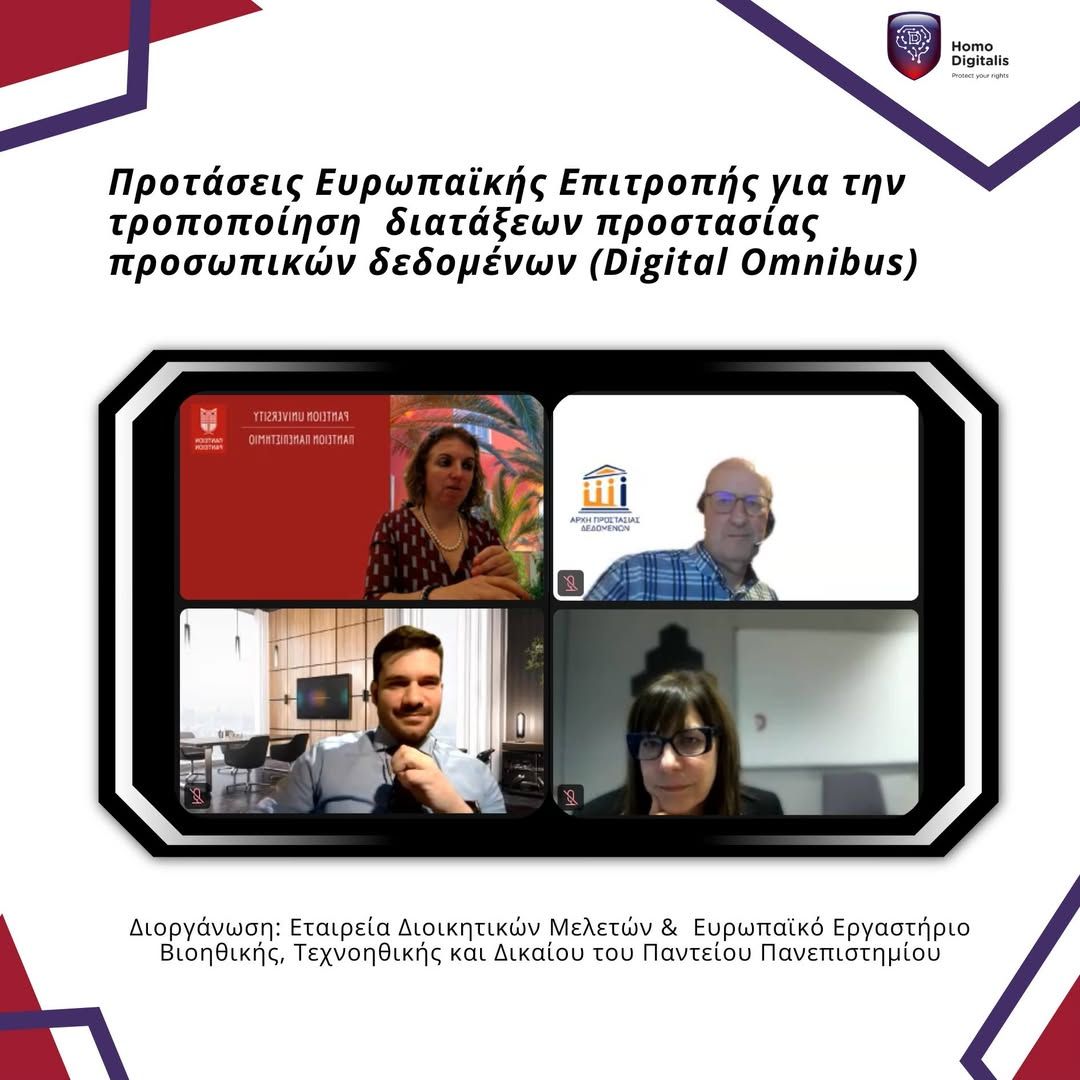
Homo Digitalis successfully participated in a scientific online event on the Digital Omnibus package
On Thursday, February 26, 2026, Homo Digitalis had the honor of delivering a presentation at a scientific online event organized by the Society of Administrative Studies in collaboration with the European Laboratory for Bioethics, Technoethics and Law of Panteion University, on the topic of the European Commission’s proposals to amend provisions on personal data protection (Digital Omnibus).
Homo Digitalis was represented by Stefanos Vitoratos, while presentations were also delivered by Dr Giorgos Rousopoulos (Hellenic Data Protection Authority) and Dr Zoe Kardasiadou (Official at the European Commission, Directorate-General for Justice and Consumers).
The discussion was moderated by Dr. Fereniki Panagopoulou-Koutnatzi, Associate Professor at Panteion University, while opening remarks were delivered by Dimitrios Skaltsounis, President of the Society of Administrative Studies and former President of the Council of State.
We express our warm thanks to the organizers for the honorable invitation and for the opportunity they offered us to participate in a fruitful dialogue and a meaningful exchange of arguments and views.
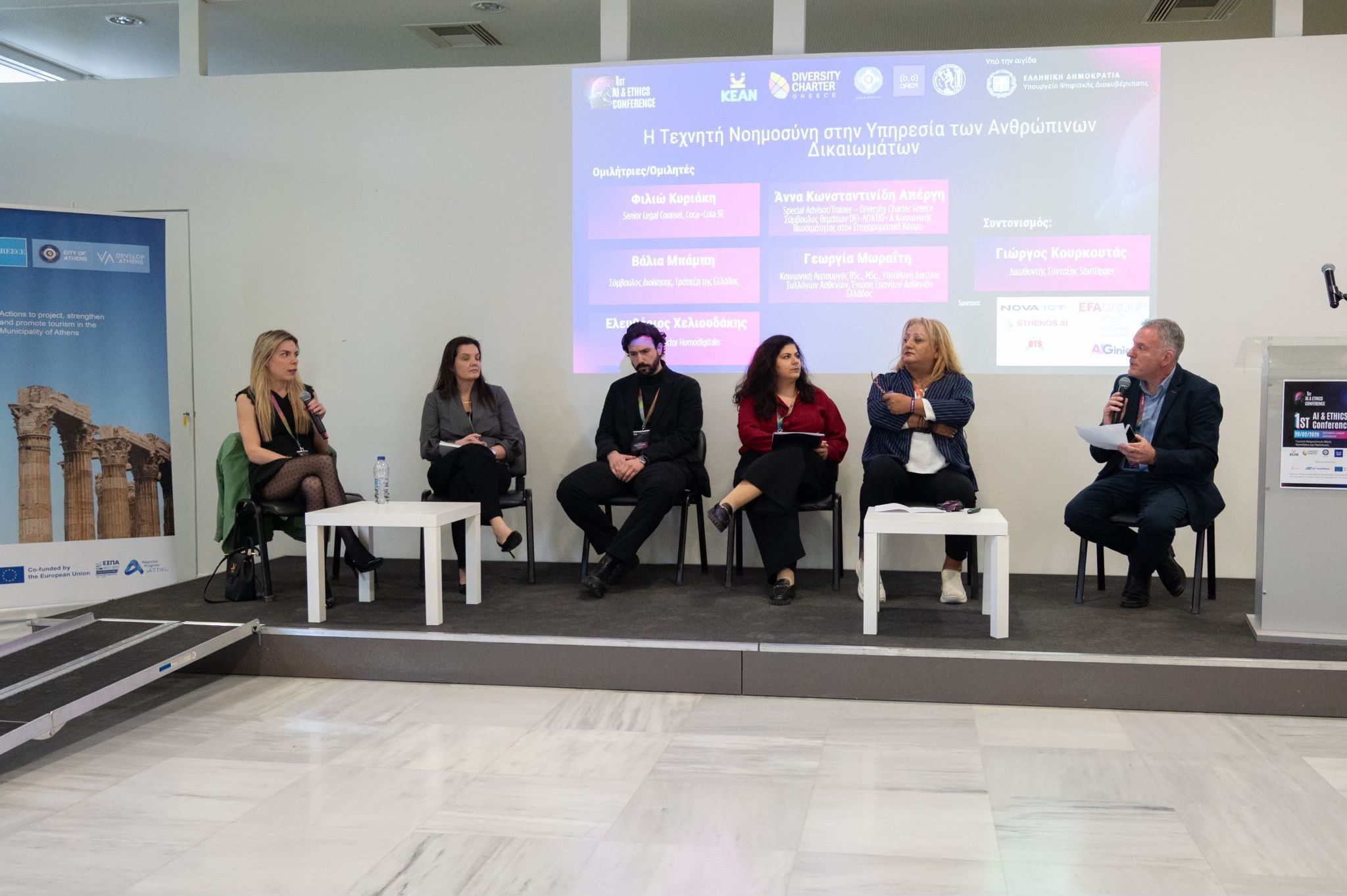
Homo Digitalis successfully completed its participation in the AI & Ethics Conference
On Friday, February 20, Homo Digitalis had the great pleasure of speaking at the AI & Ethics Conference!
The conference panels sparked discussions with a critical perspective, while public institutions, the academic community, the market, and civil society exchanged ideas and views on how artificial intelligence can remain human-centered while also being compatible with the protection of Fundamental Rights.
We would like to warmly thank the organizers for their kind inclusion, KEAN – Cell of Alternative Youth Activities, as well as Raina Melissinou and Konstantinos Kechagias for their gracious invitation. Our team was represented by our Executive Director, Eleftherios Chelioudakis.
Open Call on AI, Intellectual Property, and Culture
In the context of the UNESCO’s Global AI Ethics and Governance Observatory, the Subgroup on AI, Culture and Intellectual Property has launched an open call for contributions to co-design a civil-society-led Repository on AI, Intellectual Property and Culture.
The initiative aims to strengthen responsible AI governance by supporting CSOs, artists and cultural organizations working at the intersection of AI, cultural rights and knowledge commons. Broad participation is essential to ensure the repository is inclusive, rights-based and grounded in real-world practice.
Submission Deadline is: March 16th, 2026 (11:59 PM ET). You can find more information and apply here.
The subgroup is composed of IT for Change, AI Impact Alliance, Data Privacy Brasil, Homo Digitalis, InternetLab, OdiseIA, EITESAL NGO and European Law Institute (ELI).
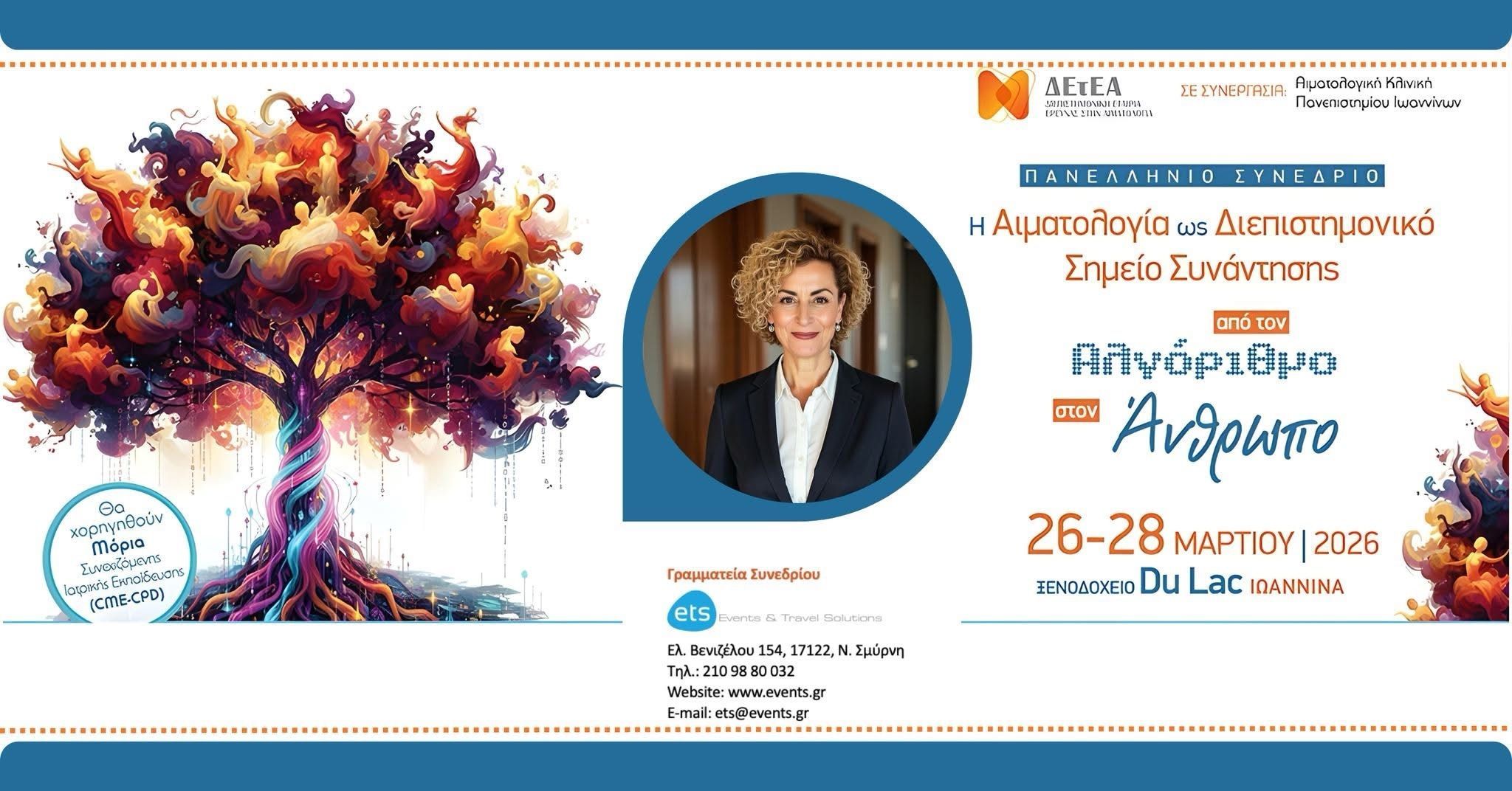
Homo Digitalis participates in the Panhellenic Conference “Hematology as an Interdisciplinary Meeting Point: From the Algorithm to the Human”
What does it mean to put the Human above the Algorithm? This question lies at the heart of the Panhellenic Conference “Hematology as an Interdisciplinary Meeting Point: From the Algorithm to the Human”, organized by the Interdisciplinary Society for Research in Hematology on March 26–28, 2026, in Ioannina.
Three days of free debates, AI workshops, interdisciplinary sessions, and open discussions on topics that are rarely spoken about openly — from toxic behavior in hospitals to patients’ rights in the age of data.
We warmly thank hematologist and Associate Professor of Hematology at the School of Health Sciences, Department of Medicine, University of Ioannina, Eleftheria Chatzimichail, for the honorable invitation to Homo Digitalis and other members of the Greek AI Network (GAIN) to participate.
Our member, Dimos Kostoulas, will represent Homo Digitalis at the event.
The countdown has begun, and we look forward to seeing you there!
Free registrations: https://ets.betterevents.live/form/diep2026

The presentation by Homo Digitalis was successfully completed as part of the SURE program
On February 16, Homo Digitalis delivered an educational presentation as part of the program “SURE – Strategies for Using Rights and Achieving Equality” and the conference “Experience Exchange Conference – Strategic Litigation Using EU Law and the EU Charter of Fundamental Rights”.
The conference was organized by the Centre for Peace Studies (Centar za mirovne studije), Human Rights House Zagreb, and Green Action / Friends of the Earth Croatia, in collaboration with the Croatian Ombudswoman (Pučka pravobraniteljica) and the Justice and Environment network.
Our organization was represented by our Executive Director, Eleftherios Chelioudakis, who spoke about the case concerning the KENTAVROS and HYPERION systems.
We warmly thank the organizers, especially Cvijeta Senta and Ivan Novosel for their kind invitation, as well as Itxaso Domínguez de Olazábal and European Digital Rights for the opportunity to participate.
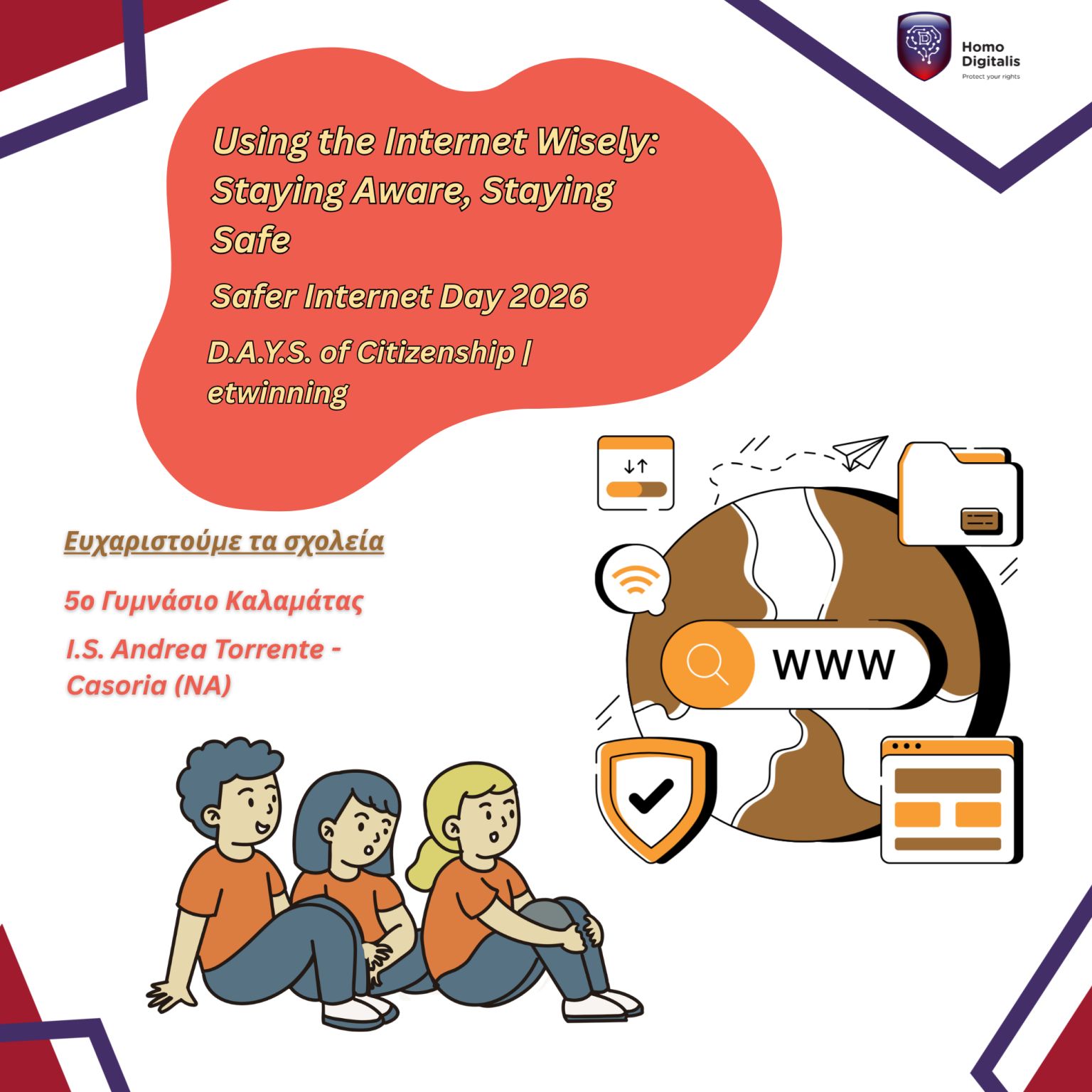
We celebrate Safer Internet Day with students
On February 10, we celebrated Safer Internet Day 2026 together with students from different countries, including Greece, Italy, and Turkey!
As part of the eTwinning project “D.A.Y.S. of Citizenship,” founded by the 5th Gymnasium of Kalamata and co-founded by the Italian school I.S. Andrea Torrente – Casoria (NA), we held an online discussion on:
▪️ social media and the way they are designed to capture the attention of both young people and adults, often leading to addiction,
▪️ the use of Artificial Intelligence to create deepfakes and the risks they entail,
▪️ cyberbullying, as well as the tools and practices available to help us protect ourselves effectively.
At the end of the presentation, we also played an educational quiz, putting into practice what we learned!
We warmly thank the teacher of the 5th Gymnasium of Kalamata, Tzina Mouselimi, for the kind invitation, as well as all the teachers who participated for their collaboration.
Homo Digitalis was represented by Eleftherios Chelioudakis.